
Smart Building Technology in the UAE
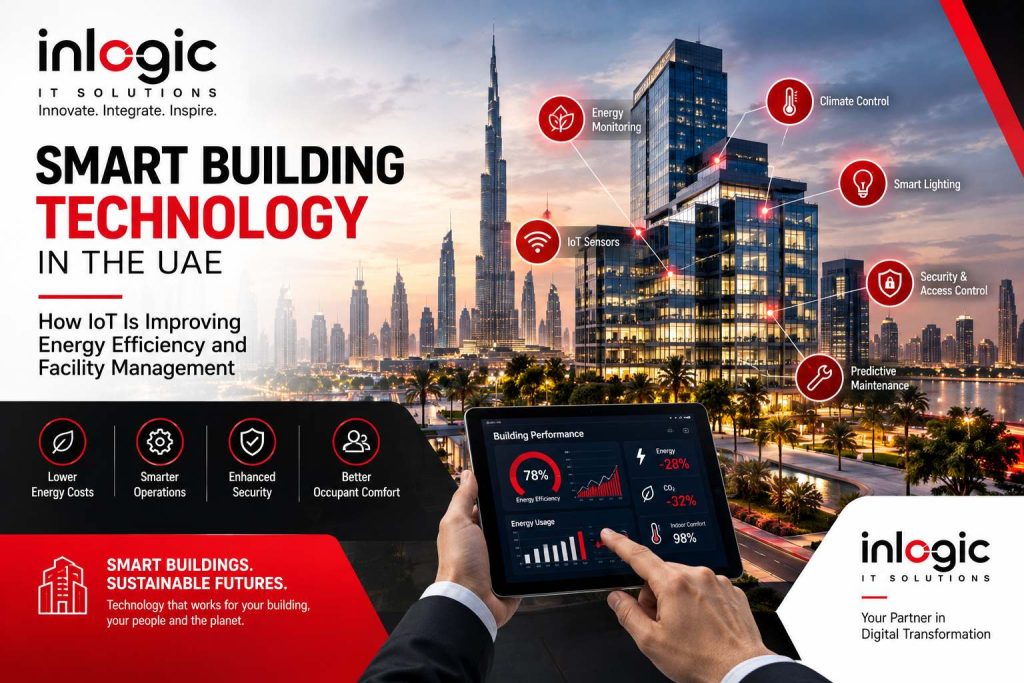
How IoT Is Improving Energy Efficiency and Facility Management
Buildings are becoming smarter as businesses adopt technology to improve energy efficiency, automate routine tasks, and manage facilities more effectively. From commercial offices and shopping centers to hotels and residential properties, modern buildings increasingly rely on connected systems to monitor performance and support daily operations.
In the UAE, where commercial developments and large property portfolios require efficient management, smart building technology offers new opportunities to reduce unnecessary resource consumption and improve occupant comfort.
The combination of the Internet of Things (IoT), automation, cloud computing, and data analytics enables building operators to collect information from connected devices and make better operational decisions.
For businesses exploring digital transformation, understanding these technologies is an important step toward creating more efficient and sustainable environments.
What Is Smart Building Technology?
Smart building technology uses connected devices, sensors, software, and automated systems to monitor and manage building operations.
These technologies collect information about conditions such as temperature, energy consumption, occupancy, lighting, and equipment performance. Building operators can use this information to understand how their facilities operate and identify areas for improvement.
A smart building system may include:
- IoT sensors for environmental monitoring
- Automated lighting and climate control
- Smart energy and water meters
- Building management systems (BMS)
- Digital dashboards and reporting tools
- Equipment monitoring and maintenance alerts
- Access control and connected security systems
Instead of managing every building function separately, organizations can integrate relevant systems to improve visibility and coordination.
How Does IoT Work in Smart Buildings?
The Internet of Things connects physical devices to digital systems so they can exchange information and support automated processes.
In a smart building, sensors collect information from different rooms, equipment, and utility systems. The information is transmitted to a central platform, where it can be displayed through dashboards, analyzed, or used to trigger alerts.
For example, a temperature sensor may detect that a room is warmer than its configured target. Depending on the system’s design and permissions, this information can notify facility managers or support an automated adjustment to the cooling system.
The same approach can help monitor water usage, identify unusual energy consumption, and track equipment conditions.
The key advantage is that building operators gain more visibility into what is happening across their facilities without relying entirely on manual inspections.
Why Are Smart Building Solutions Important in the UAE?
Businesses in Dubai, Abu Dhabi, and other UAE locations often manage complex buildings that require continuous attention to comfort, utilities, equipment, and maintenance.
Traditional facility management can involve separate systems, manual readings, scheduled inspections, and reactive maintenance. These approaches can make it difficult to identify problems early or understand performance across multiple properties.
Smart building solutions help address these challenges by connecting building information and making it easier to monitor operational conditions.
Potential benefits include:
Better energy management: Monitoring consumption helps identify unusual usage patterns and opportunities to reduce waste.
Improved occupant comfort: Temperature and indoor environmental monitoring help facility teams identify conditions that may require attention.
Faster maintenance response: Automated alerts can help staff investigate equipment problems sooner.
Centralized monitoring: Managers can review information from multiple systems through connected dashboards.
More informed decisions: Historical data helps organizations compare performance and plan improvements.
Actual results depend on building design, system configuration, operating practices, and the quality of the collected data.
How Smart Buildings Improve Energy Efficiency
Energy consumption is an important consideration for commercial properties, hotels, offices, and other large facilities.
Without detailed monitoring, businesses may struggle to determine which equipment or areas are consuming more energy than expected.
Smart energy management systems can provide information about electricity consumption, cooling systems, lighting, and other connected equipment.
Facility managers can use these insights to:
- Identify unusual energy consumption
- Adjust operating schedules
- Detect equipment inefficiencies
- Monitor performance after improvements
- Compare consumption across different areas
- Establish energy management targets
For example, an office building may discover that certain areas continue using lighting or cooling outside normal operating hours. Reviewing this information can help management investigate the cause and adjust schedules where appropriate.
Smart technology does not automatically guarantee lower energy bills. Its value comes from combining reliable monitoring with practical operational changes.
Predictive Maintenance: Identifying Problems Earlier
Traditional maintenance often follows fixed schedules or begins after equipment stops working. Both approaches can leave opportunities for improvement.
Predictive maintenance uses equipment data, operating patterns, and condition monitoring to identify warning signs that may indicate a developing problem.
In a smart building, connected sensors may monitor equipment temperature, vibration, operating hours, or other relevant measurements.
When the system identifies an unusual pattern, it can generate an alert for further investigation.
This approach can help maintenance teams prioritize inspections, plan service activities, and reduce unexpected interruptions.
However, predictive maintenance depends on suitable sensors, reliable data, appropriate analytical methods, and qualified personnel who can validate alerts before taking action.
The Role of AI in Smart Building Management
Artificial intelligence can extend smart building capabilities by helping operators analyze large volumes of operational data.
While basic monitoring shows current conditions, AI-supported analytics can help identify patterns, detect anomalies, and estimate future maintenance requirements.
Potential applications include:
- Detecting unusual energy usage
- Identifying recurring equipment problems
- Forecasting maintenance needs
- Analyzing indoor environmental conditions
- Supporting automated reporting
- Helping prioritize facility management tasks
For example, an AI-supported system may identify that an air-conditioning unit regularly operates outside its expected performance pattern. A maintenance team can investigate the issue before it develops into a larger operational problem.
AI recommendations should be evaluated against actual equipment conditions, business requirements, and safety considerations.
Smart Building Technology for Different Industries
Smart building solutions can support organizations across several sectors.
Commercial Offices
Businesses can monitor energy usage, manage indoor comfort, and coordinate maintenance activities across office spaces.
Hospitality
Hotels can use connected systems to monitor room conditions, manage energy consumption, and support efficient maintenance while maintaining guest comfort.
Healthcare
Hospitals and clinics may use environmental sensors and connected monitoring systems to support appropriate conditions in selected spaces.
Education
Schools and universities can monitor indoor environmental conditions, manage building resources, and improve visibility across campuses.
Residential Communities
Property managers can use connected meters, sensors, and monitoring platforms to improve visibility into utilities and shared building facilities.
The right implementation depends on each property’s operational priorities, existing infrastructure, and budget.
What Should Businesses Consider Before Implementing Smart Building Solutions?
Before investing in smart building technology, organizations should identify the problems they want to solve.
A practical implementation plan should consider the following factors.
1. Define clear objectives. Determine whether the priority is energy management, maintenance, environmental monitoring, automation, or centralized reporting.
2. Assess existing infrastructure. Review current building management systems, meters, equipment, and available connectivity.
3. Choose compatible technologies. Ensure that new devices and software can integrate with existing systems where required.
4. Protect connected systems. Apply appropriate access controls, network security, software updates, and data protection measures.
5. Start with measurable goals. A pilot project can help assess performance before expanding the solution across additional buildings.
6. Plan for ongoing maintenance. Sensors, integrations, software, and automated processes require monitoring and periodic review.
A well-planned implementation helps organizations avoid unnecessary complexity and focus on measurable business outcomes.
How Inlogic IT Solutions Supports Digital Transformation
At Inlogic IT Solutions, we focus on technology solutions that help businesses improve their digital capabilities, streamline processes, and support operational growth.
Smart building projects can involve several connected technologies, including software platforms, system integrations, automation, and data analytics. These components need to work together to provide useful information and support reliable operations.
Inlogic’s broader technology expertise can support organizations exploring custom software, business automation, system integration, and other digital transformation initiatives.
Businesses should select solutions according to their specific requirements, existing infrastructure, and operational objectives.
By approaching technology strategically, organizations can establish a stronger foundation for connected operations and future innovation.
Frequently Asked Questions
What is a smart building?
A smart building uses connected sensors, software, automation, and monitoring systems to manage building functions such as lighting, cooling, energy consumption, security, and equipment maintenance.
How does IoT improve building management?
IoT connects physical devices and sensors to digital platforms, allowing building operators to monitor conditions, receive alerts, review performance data, and automate selected tasks.
Can smart building technology reduce energy consumption?
Yes. Smart building technology can help identify unnecessary energy use, improve operating schedules, and monitor equipment performance. Actual savings depend on the building, system configuration, and actions taken in response to the data.
What is the difference between a BMS and a smart building system?
A building management system (BMS) monitors and controls selected building services. A broader smart building system may integrate the BMS with IoT sensors, analytics, cloud platforms, energy monitoring, and other connected applications.
How does AI support smart building management?
AI can analyze operational data to identify unusual patterns, support predictive maintenance, improve energy analysis, and help facility teams prioritize tasks. Human oversight remains important when evaluating recommendations and making operational changes.
Are smart building solutions suitable for existing buildings?
Yes. Many existing buildings can adopt selected smart technologies through compatible sensors, meters, software integrations, or upgrades to current systems. The appropriate approach depends on the existing infrastructure and project requirements.
What industries benefit from smart building technology in the UAE?
Commercial real estate, hospitality, healthcare, education, residential communities, and industrial facilities can benefit from connected monitoring and automation, depending on their operational needs.
Conclusion
Smart building technology is changing how organizations monitor facilities, manage resources, and maintain building equipment.
By combining IoT sensors, automation, data analytics, and AI, businesses can gain better operational visibility, identify inefficiencies, and make more informed decisions.
For organizations in the UAE, the most effective approach is to begin with clear objectives, assess existing infrastructure, and adopt technologies that address practical operational challenges.
As digital transformation continues, connected building systems can become an important part of creating more efficient, responsive, and sustainable facilities.
Inlogic IT Solutions helps businesses explore technology-driven approaches to digital transformation, software integration, and operational improvement.
